
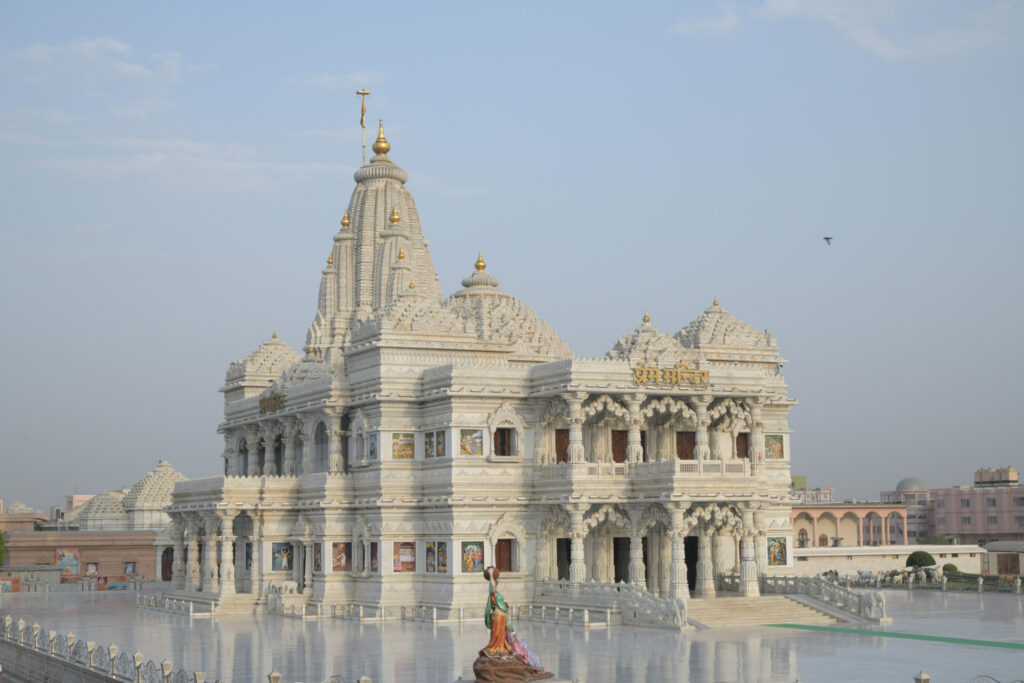
Vrindavan: Where Every Step Feels Like a Prayer
Vrindavan is an important pilgrimage site 15 km away from Mathura. As soon as the name of Vrindavan comes the attention of Lord Krishna’s pastimes. It was here in the forest that he created a rapport with the gopis and fascinated Radha. Chaitanya Mahaprabhu, an incarnation of God, discovered the sacred places of Vrindavan that had become extinct in the course of time. Chaitanya Mahaprabhu came to Vrindavan in 1515 AD. Chaitanya Mahaprabhu directed his two beloved disciples Roop and Sanatan to reside in Vrindavan in the early 16th century, where Jeevagoswami, Radhunath Bhatt and Gopal Bhatt later met him.
History of Vrindavan
The history of Vrindavan, located in Uttar Pradesh, India, is deeply fascinating. The very name of Vrindavan evokes the charm, love, and playful spirit of Lord Shri Krishna. It is here that Krishna lovingly wooed Radha and joyfully frolicked with the gopis, making Vrindavan a timeless symbol of divine love and devotion.
History of Mathura
The history of Mathura goes back about 2,500 years. It is located on the banks of the Yamuna River. Because of this, Mathura is considered a sacred city by Hindus. It is also mentioned in the ancient epic Ramayana.
The city was earlier called Madhuvan because it had dense forests. Later, its name was changed to Mathura. Mathura is mainly known for its close connection with Lord Krishna.
In addition, the Greek astronomer Ptolemy mentioned a city called Modoura, meaning the “City of Gods.” Moreover, Mathura was also important to Jain and Buddhist followers.
Temples That Breathe Devotion
Vrindavan is home to thousands of temples, each carrying its own history and spiritual significance. The Banke Bihari Temple is one of the most famous and beloved temples in Vrindavan. The playful form of Lord Krishna here attracts devotees from across the world. Unlike other temples, there are no bells inside. People believe that Krishna does not like loud sounds.
Another major temple is the ISKCON Temple, also known as Krishna Balaram Mandir. This temple has become a global spiritual center, drawing devotees from different countries. The continuous chanting of Hare Krishna, the rhythmic kirtans, and the peaceful environment create a deep sense of inner calm.
The Radha Raman Temple, Radha Vallabh Temple, and Madan Mohan Temple are equally significant. Each temple tells a story of devotion, sacrifice, and divine love. Visiting these temples feels less like sightseeing and more like a spiritual journey.
The Yamuna: A River of Faith
The Yamuna River flows gently alongside Vrindavan, carrying centuries of devotion in its waters. For devotees, the Yamuna is not just a river but a divine presence. Bathing in the Yamuna is believed to cleanse sins and bring spiritual purity.
Ghats like Keshi Ghat come alive during early mornings and evenings. The sight of devotees offering lamps, chanting prayers, and floating diyas on the river creates a magical atmosphere. During Yamuna Aarti, the entire ghat glows with devotion, making it a moment of deep spiritual connection.
Parikrama: Walking as Worship
One of the most unique spiritual practices in Vrindavan is parikrama, or circumambulation. Devotees walk barefoot around the sacred land, believing that each step brings them closer to God. The Vrindavan Parikrama and Govardhan Parikrama are acts of devotion rather than physical journeys.
As devotees walk, they chant God’s name, sing bhajans, and reflect inwardly. Elderly devotees, young seekers, monks, and householders walk side by side, united by faith. In Vrindavan, walking itself becomes a form of prayer.
A Town Beyond Time
Vrindavan does not follow the pace of the modern world. Life here moves slowly, guided by temple bells, prayer times, and devotional gatherings. Sadhus dressed in saffron robes, widows chanting bhajans, cows freely roaming the streets—all form an inseparable part of Vrindavan’s identity.
Many widows come to Vrindavan to find peace and meaning in life. Their lives are difficult, but their devotion gives the town a quiet strength. Their constant chanting shows that true devotion does not depend on wealth or comfort.
Festivals That Light Up the Soul
Vrindavan celebrates festivals with unmatched devotion and joy. Janmashtami, the birth of Lord Krishna, transforms the town into a divine celebration. Temples are decorated, bhajans fill the air, and devotees fast until midnight to celebrate Krishna’s birth.
Holi in Vrindavan is world-famous. Unlike ordinary Holi celebrations, Vrindavan’s Holi is deeply spiritual. Devotees play with colors while singing devotional songs, symbolizing divine love rather than mere festivity. The Phoolon Ki Holi, where flowers replace colors, is a unique and beautiful experience.
A Place of Inner Transformation
Many visitors come to Vrindavan as tourists but leave as seekers. The simplicity of life, the depth of devotion, and the constant remembrance of God have a powerful effect on the mind. Vrindavan encourages people to slow down, let go of ego, and reconnect with their inner self.
Meditation, bhajan sessions, and spiritual discourses are common throughout the town. Ashrams offer spaces for learning, reflection, and service. Even silence feels meaningful in Vrindavan, as if the land itself is guiding the soul inward.
Where Every Step Is a Prayer
What makes Vrindavan special is not only its temples or history, but the feeling it creates. In Vrindavan, devotion is a part of daily life. God’s name is heard in every street, temples invite people to surrender, and every step feels like a prayer.
Vrindavan teaches that God is not distant or unreachable. He lives in love, simplicity, and devotion. Whether one believes deeply or simply observes, Vrindavan leaves a lasting impression on the heart.
In a world full of noise and rush, Vrindavan stands as a reminder of divine love and spiritual peace. It is a place where faith walks beside you, where devotion flows naturally, and where every step truly feels like a prayer.